Website Designer and Web Development Company in Manchester
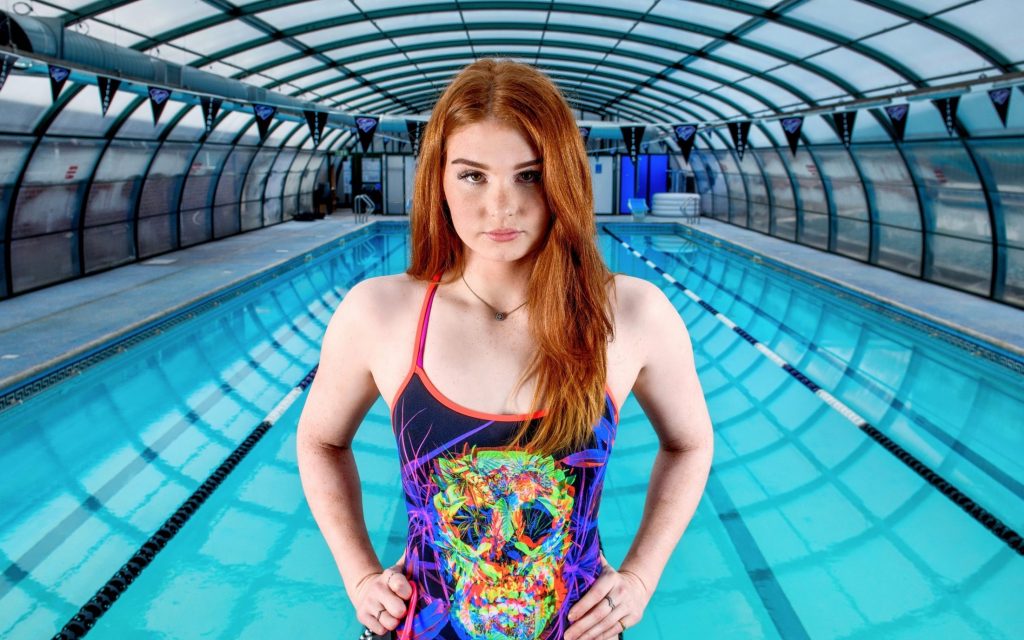
Freya Anderson has the kind of swagger that’s attractive to her teammates. The 17-year-old is one of the youngest members of Team England at the Commonwealth Games in Australia, and she’s already competed at an Olympics. But despite this pedigree and experience, she says she isn’t feeling any pressure ahead of this year’s competition. “I’m not feeling any pressure at all,” says Freya. “It was just amazing and hopefully I can do it again.”
For years, the Commonwealth Games were dominated by British swimmers. In the 1970s and 1980s, Britain won more than half of all the medals available in the pool. But in recent years, other nations have asserted their dominance – especially Australia and South Africa.
The Commonwealth Games are a multi-sport event involving teams from the Commonwealth of Nations. They are held every four years, alternating between summer and winter editions. The first games were held in 1930.[1]
The following year, Australia won an unprecedented 16 out of 20 gold medals at the 1932 Summer Olympics in Los Angeles (the other two were won by Canada).[2] That same year saw South Africa win its first ever medal at a major international sporting event with silver in women’s hockey.[3][4] In 1954 England took three gold medals at Melbourne – one for distance running; one for archery and another given to her by Lord Snowdon.[5][6]
It’s been a while since Team England won six medals at Glasgow 2014, but the fact that they were able to compete with Australia and South Africa in that sport was a good sign.
And now, British Swimming has been in decline for several years. It’s not as good as it used to be; we are no longer dominant like we once were at the Commonwealth Games. We need to be better than Australia and South Africa if we want our athletes to medal at Tokyo 2020!
“I think we’re going to be pretty strong,” says Freya Anderson, one of the youngest members of the team. “We’ve got a really young team as well.”
She’s right: The women are all under 20 years old, and many have never competed in an international competition before. But they’ve come together to represent Australia at what they hope will be their country’s first Olympic games since 2000—a year in which Freya was just 6 years old.
“I’m not feeling any pressure really,” she said before leaving home for Rio de Janeiro on Thursday morning (August 10). “I think it’s pretty cool being able to do this.”
At 17 years old, she was “shocked” to be selected for the Games.
She said: “I’ve been working really hard and it’s all paid off now. When I first started training I was only doing one or two sessions per week but now I’m doing five or six. It’s a lot more intense than what you think when your mum says ‘do an hour of exercise’. It can be tough sometimes but it’s worth it.”
She is one of the youngest members of Team Australia, and is competing in her first Olympics.
She won four gold medals in Hungary earlier this year setting junior world records in both individual freestyle events. She was selected to compete at this year’s Games in Australia’s Gold Coast where she will be up against some of the best swimmers in the world including American Katie Ledecky and Canadian Kylie Masse.
“I wasn’t expecting it because I was still quite young for my age group,” she tells Newsbeat. “But I was obviously very happy with that.”
Anderson first took up the sport when she was eight, and quickly became one of Britain’s best sprinters. She won gold at the European Youth Games in 2014, and then silver at last year’s World Championships in Stockholm.
Despite being so young, Anderson has already competed at an Olympics. She was part of Team GB’s 4x100m freestyle relay squad that finished fourth at last year’s Rio de Janeiro Games.
The 15-year-old was the youngest member of that team and it was a special moment for her to represent her country on such an important stage for swimming.
Her success has led to comparisons with another high-profile British swimmer – Rebecca Adlington – but Anderson says she is “not feeling any pressure”.
“I’m just doing what I enjoy and hopefully it will pay off,” she said. “I don’t think about that much, really.”
“My mum keeps saying: ‘Why aren’t you getting any attention? You’re doing so well,’ but I’m just focusing on my swimming and trying not to think about it,” she says.